WORK

WORK. It's what we do, what we obsess over, celebrate, complain about, get paid for. We may call it Art, but it's still work. Particularly for creative types, where we do our work must have something to do with how it turns out, for better or worse - yet we rarely get to see behind the curtain.

We would like you to share something about your special place where creativity blooms. So where do you work?

Friday, April 19, 2013

Finding a Home for a Dream House

 This week we are pleased to have a guest blogger and accomplished journalist with a personal story to share.
By Hilary Abramson

They call it The Wisteria House.

Near the edge of the Sacramento River, vines the size of an elephant’s leg twist around even thicker poles from berm to trellis.   Bare-root in the winter, they create a lattice against skylights through which the sun warms aggregate floors.  Spring’s purple blooms reserve their show for the flat roof, since most of the energy goes into the green canopy that cools everything down come summer.
It has taken more than three decades to create this sustainable umbrella. Now that it is done, it is time for me to leave.  The dream is fulfilled. It is the right time to pass it on to someone who will likewise love, respect and care for it.
This is the house that Brent Smith designed.  An artist at heart (and former Sacramento high school art teacher), Brent might be the only California home designer to have a bronze plaque in a park across from City Hall: “Brent Smith, humanitarian,” it reads. “He truly believed that we were here to transform matter into spirit and touch the soul.” 

When he was killed by a city bus in 2002, Brent was 61 years of age and perhaps best known for designing the downtown Quinn Cottages homeless village to which he donated his time and money. He also created the Rumsey Wintun Tribe Village as a multigenerational development and other homes in northern California.

But it is Sacramento County’s first passive-solar, Wisteria House – built in 1978 -- that is probably his most widely published design.
Brent and I had met two years earlier in his University of California, Davis, extension course on building and designing your own, small energy-efficient house.  A Jersey girl to whom “do-it-yourself’ meant doing your hair without help from a professional, I enrolled on an impulse. Once in the sway of Brent’s intensity and philosophy of living, his obsession became mine.

Those were the days of “small is beautiful,” and Brent walked the talk. He believed homes should be “sacred” and reflect “vocabulary” of their surroundings without imitating other designs.  He preached designing homes with expansion in mind.  Design what you need, he’d say, in a way that offers multiple use of space and provides with integrity of design for adding square footage for children and/or elders.  Why build huge spaces and waste precious energy heating and cooling them for one or two people?  How many American dining rooms sit empty while a couple eats in the kitchen or den?

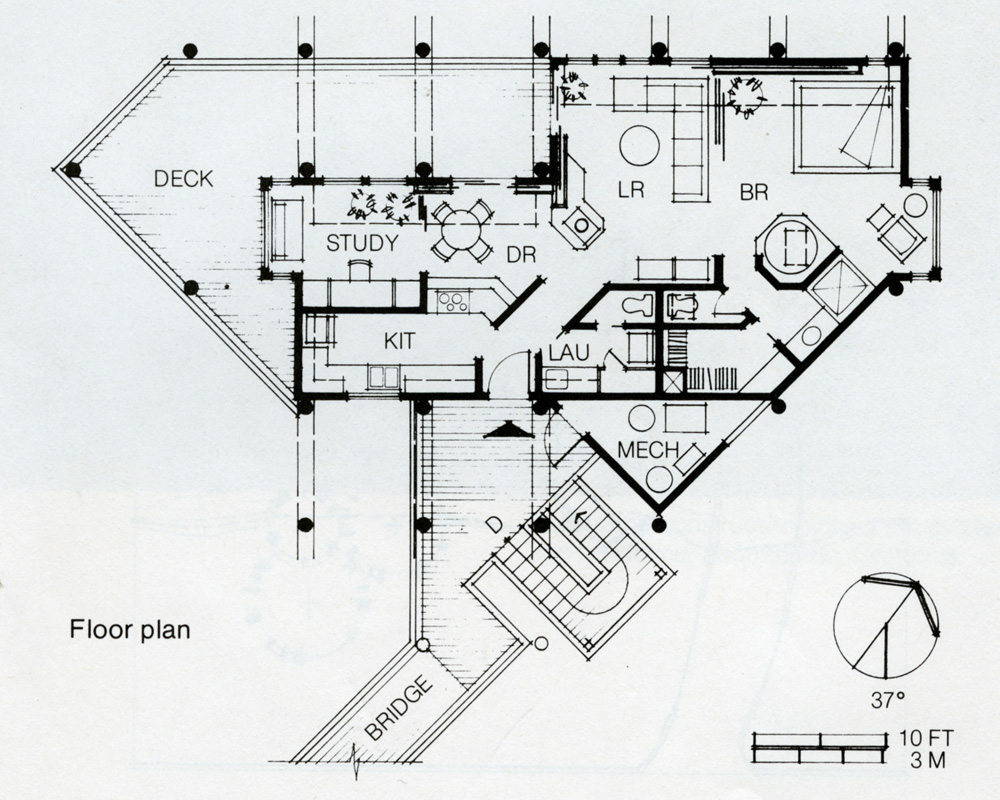
The Wisteria House, for instance, is 1,065 square feet of open space with insulated, moveable shojis, several of which lift out to create space for the dining area to seat up to eight people. In place, those moveable doors offer privacy for a second bedroom/study off the dining room.  The foundation of 36 poles deep in cement was separately engineered for earthquake and flood and remains level today.  Brent’s vision for more than two, pared-down dwellers was to add another story. 


Those were the days when farmers and only a few urban individualists willing to deal with wells, septic tanks and floods lived off the Garden Highway, a two-lane road separating the Sacramento River from riparian and farmed fields. I bought three-quarters of an acre two miles north of the Elkhorn Boat Dock, and when Brent’s course was over, I asked if he would design a small, pole house that would put us “above the flood.”

On retreat at California’s first commune—Ananda in Nevada City—Brent met the head of its construction company.  These builders meditated after their lunch breaks and you could eat off the planks they cleaned at the end of each day.  They named the house “Haridasi” (daughter of God) and to this day, “J’ai Guru” (long live the Guru) remains carved in the cement holding the country mailbox.

Despite this backstory – and a redwood hot tub in the master bedroom/bath area under a dome-shaped skylight—the house is timeless. Many visitors have remarked that it feels like combination of a New York City penthouse and a coastal Sea Ranch house.

My favorite touches:  Water running down Japanese chains inside plexi-glass downspouts; the plexiglass overhang keeping the front doorway dry and allowing full view of the wisteria-protected entrance; the ability to close the house “like a box” against too hot or too cold weather via counterbalanced, vertically drawn window shutters and hanging, insulated doors; standing in the hottub watching flames in the fire stove – and the sun going down over the river.

The Wisteria House has had many admirers.  In 1982, Architects David Wright and Dennis A. Andrejko featured it in a six-page spread in Passive Solar Architecture, logic & beauty (35 Outstanding Houses Across the United States).  That same year, Sunset magazine showed it off in two pages.  In 1983, Fine Homebuilding magazine took six pages to describe the house and how it “works.”

It is my hope that the next occupant keeps the spirit of The Wisteria House in tact. There are enough McMansions on the river.

As Brent wrote in 1996 in Dialogues with the Living Earth (New Ideas on the Spirit of Place from Designers, Architects & Innovators), “We just can’t afford to continue building unlovable buildings, towns and cities.”


Hilary Abramson is a long-time California journalist.  An award-winning staff writer at Sacramento’s two mainstream, daily newspapers for nearly 20 years, she was known particularly for news-feature profiles of movers and shakers in the capital and of people living on the under belly of California. She has also been managing editor of the venerable Pacific News Service, a health policy investigative reporter,  a public radio contributor, and consulting researcher/writer for nonprofits and foundations.  Priding herself on finding stories before the pack, Abramson has placed freelance work in The Los Angeles Times, New York Newsday, The Oregonian, The San Francisco Chronicle, San Francisco Magazine, and others.

Hilary can be reached at hilaryea@juno.com

Realtor Maggie Sekul can be reached at (916) 341-7812  www.maggiesekul.com  For a virtual tour   http://tours.us360.info/public/vtour/display/70055?_a=1&_b=1&_l=1

Saturday, March 23, 2013

A River Runs Through It: Bridge-tending in the Delta

Paintersville Bridge, Sacramento Delta
 Rashid will tell you he has the easiest job in the world. He is a shy man, quiet, not prone to look you in the eye, and he likes his solitude. Rashid is a drawbridge operator in the Sacramento Delta. His job is to sit in the small, tidy shack hanging off the side of the bridge and wait for tall boats that may come up or downriver.

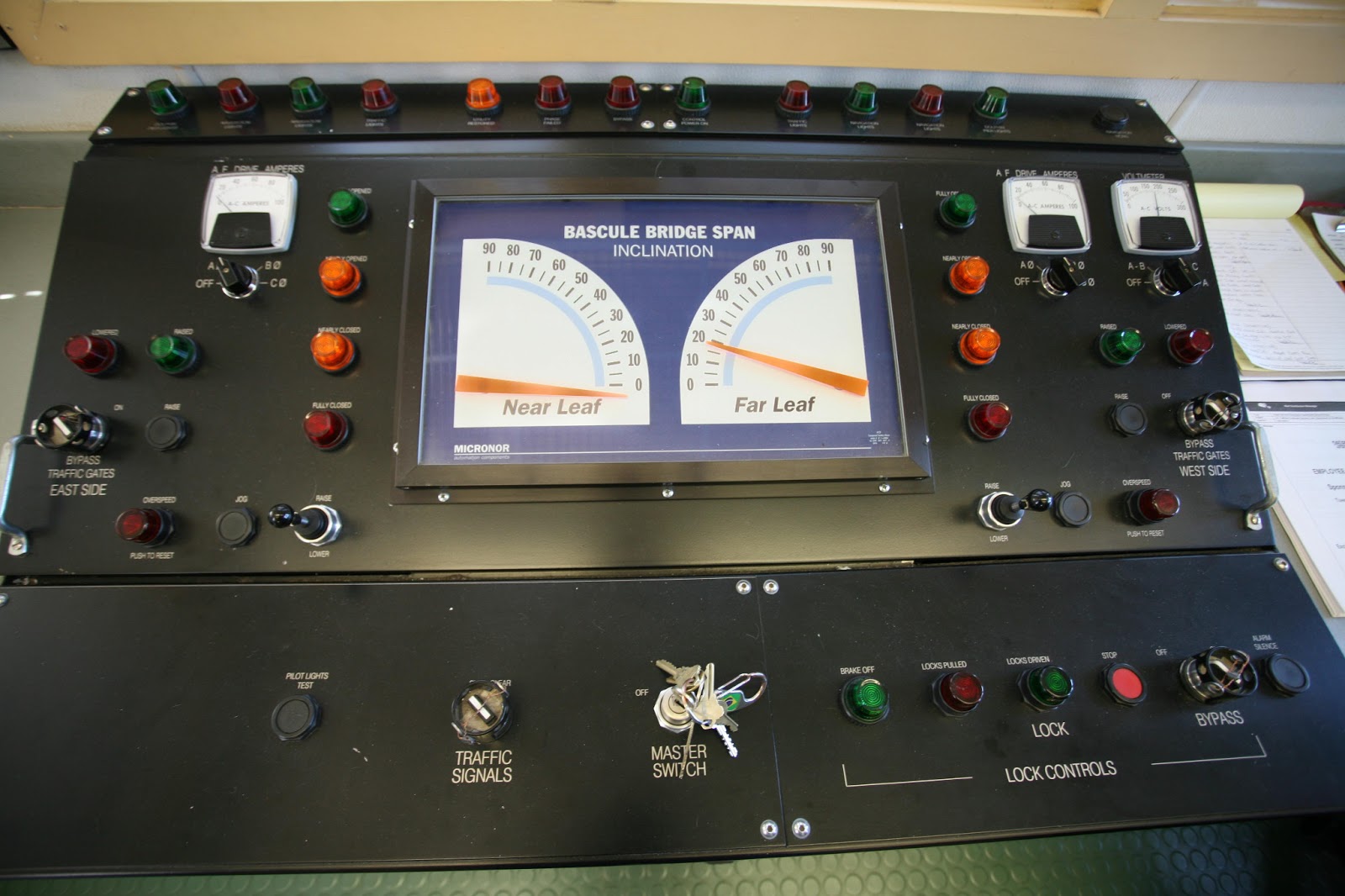
A boat captain will signal - either by phone or radio - and Rashid starts raising the bridge. It's a by-the-book process, starting with an alarm bell to stop auto traffic. Step by step, barricades are lowered, clearances confirmed, bolts unlocked, motors engaged and in a couple of minutes the bridge is raised to allow the yacht, high-masted schooner, barge or river boat to pass under.

 But most of the day is spent sitting and watching the river roll by. There's time for reading, writing or studying. There's also plenty of time for loafing, watching television and eating. It takes some discipline to avoid these temptations.The office is surprisingly pleasant, with clear view of the river and of the bridge roadway.

 Approaching the Paintersville bridge, I had romantic visions of writers like Jack Kerouac, Gary Snyder or Jim Dodge sitting in lookout stations on Desolation Peak, in splendid isolation, creating their American classic novels and poetry. The difference with a bridge is that you are not exactly isolated. Every car or truck that crosses announces itself loudly and with plenty of vibration.

 The Cal Trans District 4 operates six bridges in the Sacramento/San Joaquin delta. Paintersville, Steamboat, Isleton, Mokoloumne, Rio Vista and the big gold beast in downtown Sacramento. Counties operate few more.Most of the delta bridges are the Bascule type. They pivot upwards, thanks to immense concrete counterbalances. A few are lift bridges or turn bridges - which operate exactly as they sound.
There is an undeniable appeal in the solitary profession of bridge-tender. Our world is overrun with data and congestion, over-saturated with complexity and multi-tasking. imagine the simplicity of walking down that narrow plank path to your little shack hanging off the side of a bridge, knowing you only have one direct, simple responsibility. That's something to day dream about while stuck in traffic, eh?

Monday, February 4, 2013

Public Transportation

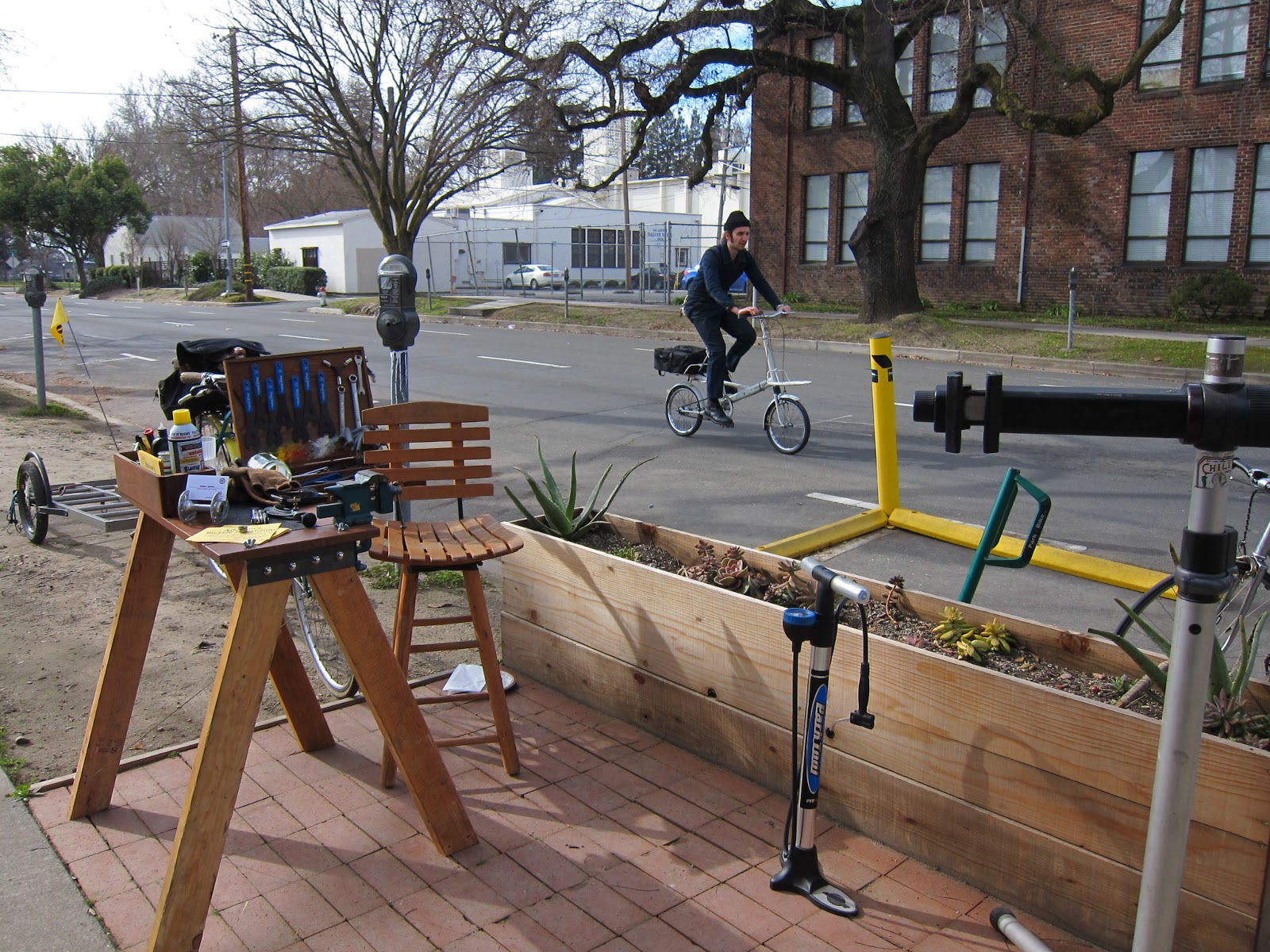
Addison is bringing bike repair to the people. For those who are lazy, preoccupied, procrastinating or simply too cheap to keep their bikes in good running repair, he could be your savior. If you stop in at Insight Coffee at 8th & S on a sunny Saturday morning, you might just find him outside the front door, laying out his tools and portable bench. He's been around the bike scene in Sacramento for some time, including a stint at Edible Pedal.
Addison's neat little pop-up street shop
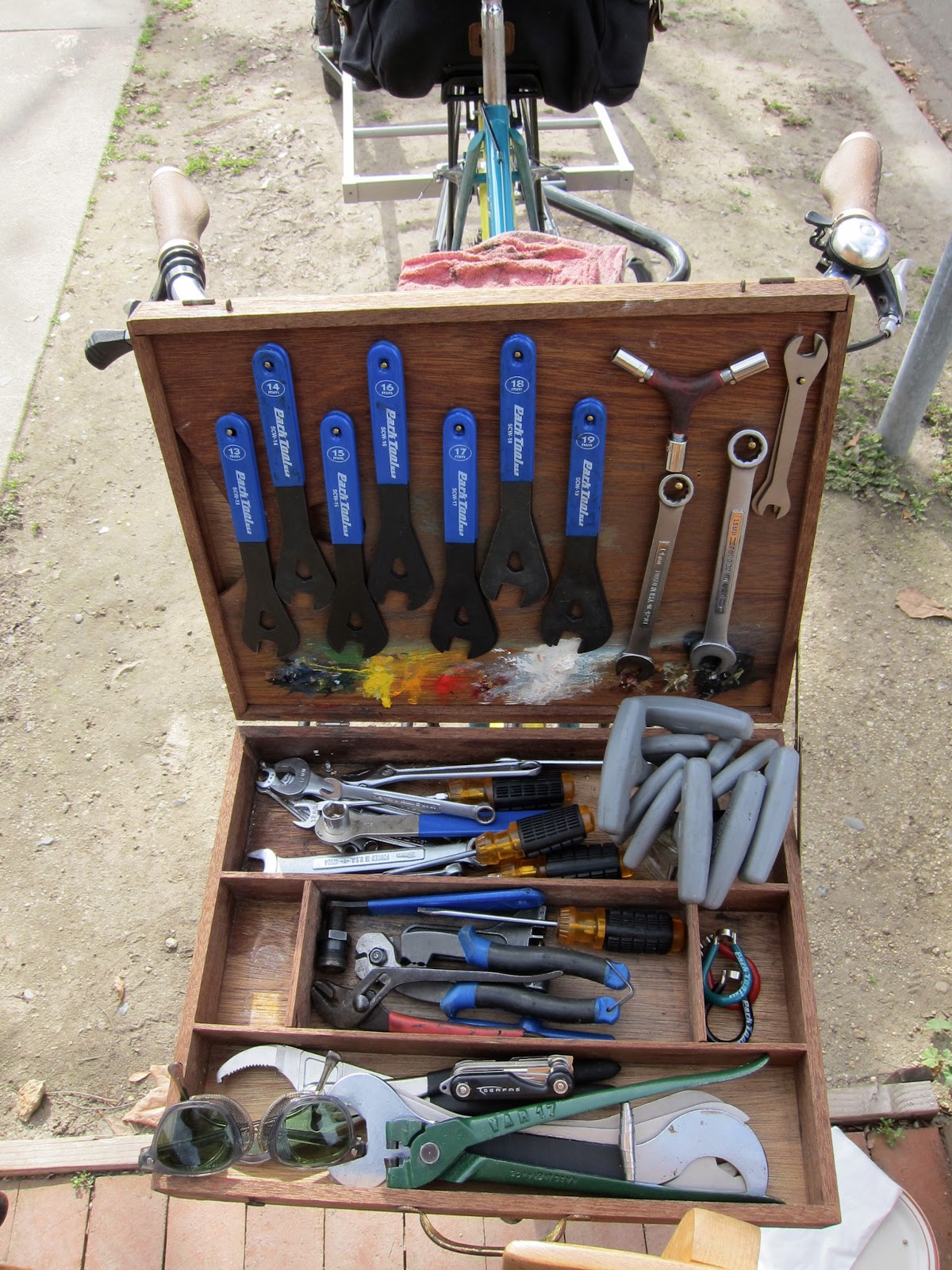
What we like best about his operation is the thoughtful setup of his mobile shop. A place for every thing, not  too much everything, Just what's needed for a quick Saturday morning repair. It all breaks down to fit on a Surly trailer for the trek back to his permanent shop at 23rd & S Streets.

Stop by for a nice hot coffee, freshly and expertly brewed, and  get that nagging shifter or dragging brake cheerfully adjusted by an expert - while you sip.

Who knows? you might learn something new about your bike and have a better ride home to show for it.
At the very least you could have a friendly conversation with a knowledgeable fellow, trying to make the city a better place for bikes.

You can also find Addison at his shop, Public Transportation, near the corner of 23rd & S Streets in Sacramento

Tuesday, October 16, 2012

Free Mending Library

 Michael Swaine mends clothes for people for free. Let me repeat that. Michael Swaine - an artist and ceramics instructor at CCA - takes a day each month  for mending, sewing and repairing clothes for people in the Tenderloin neighborhood in San Francisco. He calls this the Free Mending Library and he's been at it for more than a decade.

 What first caught our eye is the simple economy of his operation. His rolling cart with a foot-treadle sewing machine, mending storage and built-in umbrella is spare and to the point. Michael started this - project? endeavor? -  as "Reap What You Sew" pushing his cart around town, basically looking for people who might want his services. Before long he figured out two things: 1) the Tenderloin was the most interesting neighborhood for human interaction, and 2) it's easier for people to find you if they know where you will be.
Michael eventually settled in outside the Luggage Store, an art collective at 509 Ellis Street, where he mends for free on the 15th of each month. He has hope that the Free Mending Library will expand naturally, as others with talent or time show up to simply help fix things - be that clothing, appliances, resumes or whatever. All are welcome - to give help, accept it, chat, debate or just share some time.

This may be a trend - the Amsterdam the Repair Cafe was founded 3 years ago, with all the community and government support one might expect from the Dutch.

In San Francisco, Michael Swaine remains a solo act, but there is real work happening here. Not commerce, not emerging technologies, not automation. For Michael the reward is that human interaction.


You can read more about the Free Mending Library HERE.  thanks to Darby Minnow Smith and GRIST.
You can see a short feature HERE

Friday, October 5, 2012

Portable Power

 As we head into the winter season, the longer, darker days seem to set creative minds to thinking about alternatives to alternative (solar) power.
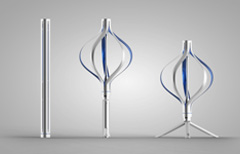
 The folks at frog design created a prototype personal wind turbine that earned them a Braun Prize for sustainability in 2012. This elegant device is light, portable and will allow you to power your workstation at any windy locale, no sunlight required.
Computer power, no sunlight required
Easy as 1, 2, 3.
While we're not sure that blogging from a blustery bench would be beneficial to our output, we are fascinated by the liberating possibilities of portable, personal wind power and we applaud this truly elegant and sensuous design.It beats the hell out of a Honda gas generator.

You can read all about it HERE

Tuesday, September 25, 2012

Facebook: Faceless workplace?

The wiley Mark Zuckerberg has hired the wry Frank Gehry to design a new, massive workplace for Facebook employees, and some folks think this is just playing it safe. It is true that Mr. Gehry is several decades past being l'enfant terrible, but all that experience may well be a good balance for the impulsive tendencies of newly-minted silicon valley billionaires. Allison Arieff is doubtful that Gehry can deliver something meaningful for Facebook - but I am more hopeful.
Frank O and Mark Z play with blocks
 Gehry has a public reputation for remarkable but expensive buildings that leak. That opinion is not well supported by fact, however. Among clients, he has a reputation for developing great building programs - the functional space layouts that make his buildings pleasant and efficient places to work. Developing a single, cohesive workplace for 2800 employees will not be easy. The idea of 2800 people of any profession all under the same roof is frightening; the more so when they are all young, flailing engineers trying to figure out what in the Hell they are producing . But if anyone is up to the task, it's Frank O. Gehry Partners.
The Architecture that architects love to hate.
You can read more about this - including an unsubstantiated jab at open offices  - at Allison Arieff's design blog.

Thursday, May 31, 2012

They say there's always magic in the air...

New York is expensive - one thin dime won't even shine your shoes. Poor creative types are always striving to live there - if you can make it there, you'll make it anywhere. Here's just such an architect, managing nicely in less space than it takes to park a Mini Cooper.
Admittedly, we'd rather have a bit more room than this, but applaud Luke for making it so.


Architects used to require layout space for plans that would eclipse this apartment size. The advance of laptop computers allows Luke to work where he lives, on the smallest of table tops.


You can see more (though there's not much more to see) by going here-
Luke Tyler's 78 Square Foot NYC Apartment